


Agentic AI: From Answer Machine to Autonomous Assistant
ChatGPT answers questions. That is useful, but limited. What if an AI system not only understood your task but completed it autonomously? Conduct a competitive analysis, summarize results, draft a report, and upload it to the CMS, all on its own?
That is exactly the approach of Agentic AI. Not a new model, but a new architecture: AI systems that plan, act, observe, and iterate. In 2026, Agentic AI is the most discussed topic in the AI industry, and the area with the greatest potential for enterprise applications.
What Is Agentic AI? A Clear Definition
Agentic AI describes AI systems with four core capabilities:
1. Planning: The system breaks a complex task into sub-steps. "Create a market analysis" becomes: research data → identify competitors → structure data → create report.
2. Tool use: The system uses external tools such as APIs, databases, search engines, and file systems. Standards like the Model Context Protocol (MCP) are standardizing this access.
3. Observation: After each step, the system checks the result. Did the search return relevant data? Is the generated text correct?
4. Iteration: Based on observation, the system adjusts its approach. If the first search strategy yields nothing, it tries a different one.
The difference from a regular chatbot: A chatbot processes a request and delivers an answer. An AI Agent executes a task across multiple steps, with its own decisions and the use of external tools.
The Levels of AI Autonomy
Not every AI system is equally autonomous. In practice, there is a spectrum:
Level 1, Chatbot: Answers individual questions. No independent action. Example: A FAQ bot on your website.
Level 2, Assistant AI: Uses tools on instruction. Example: "Search our database for...". The AI executes the search and presents results.
Level 3, Task Agent: Solves defined tasks independently. Example: "Create an SEO report for our new landing page". The agent researches, analyzes, and delivers the report.
Level 4, Workflow Agent: Orchestrates multiple task agents. Example: One agent creates content, another checks SEO, a third translates, all coordinated by a supervising agent.
Level 5, Autonomous Systems: Act continuously without human prompting. Still a research subject today, not enterprise reality.
Most enterprise applications in 2026 operate between levels 2 and 3. arocom develops solutions at these levels, with clear control mechanisms.
Technical Foundations: How Agentic AI Works
Agentic AI is not a single model but a combination of technologies:
Large Language Models form the "reasoning engine." Models like Claude or GPT-4o understand tasks, plan steps, and generate outputs.
Tool Use / Function Calling enables the model to invoke external tools such as APIs, databases, and file systems. Claude supports this natively via Tool Use and MCP.
RAG (Retrieval-Augmented Generation) gives the agent access to your own data. Instead of trusting training knowledge, the agent searches your vector database.
Orchestration frameworks like LangGraph, CrewAI, or Anthropic's Agent SDK coordinate multiple agents and manage the workflow.
For a visual overview:
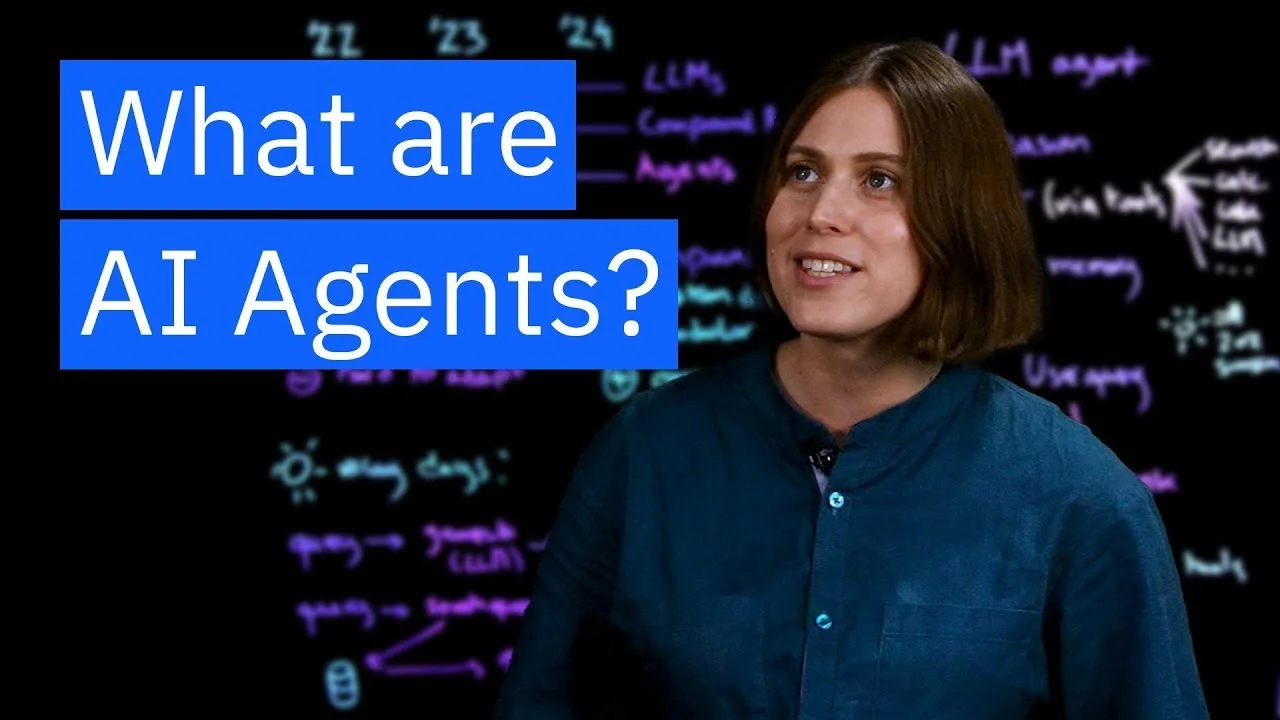
What are AI Agents?: IBM Technology
Agentic AI in Business: Where It Pays Off
Content production: An agent system drafts an article, researches facts, checks SEO criteria, and prepares the text for the CMS. The editor reviews and approves, instead of writing everything from scratch.
Data analysis: An agent receives the task "Analyze our support tickets from the last 3 months." It loads the data, categorizes requests, identifies trends, and creates a report with action recommendations.
Automated workflows with n8n: Agentic AI integrates with existing automation workflows. n8n as a workflow engine orchestrates the steps, an LLM agent handles the intelligent decisions.
Quality assurance: An agent automatically checks your website for broken links, outdated content, SEO errors, and accessibility issues, then creates a prioritized action plan.
Risks and Limitations of Agentic AI
Agentic AI is powerful, and that is precisely why it needs clear guardrails:
Error cascades: An agent that acts independently can make mistakes that multiply through subsequent steps. Checkpoints (human-in-the-loop) after critical steps are mandatory.
Hallucinations in action: When an agent acts based on hallucinated data, the consequences are real: wrong emails to customers, faulty reports, incorrect database updates.
Security: An agent with access to your systems is an attack target. Granular permissions, audit logs, and sandbox environments are not optional.
Transparency: "The AI decided that" is not an acceptable explanation. Every agent action must be traceably logged.
arocom implements Agentic AI with the principle of "minimum necessary autonomy": agents receive only the rights and freedoms they actually need for their task.
Evaluate Agentic AI for Your Platform?
arocom advises on agent-based AI architectures, from feasibility study to production-ready implementation. Get in touch.
Request Agentic AI consultationWhat is Agentic AI?
Agentic AI describes AI systems that independently plan, use tools, and solve tasks in multiple steps. Unlike chatbots that react to individual requests, agent-based systems execute complex tasks, with their own decisions and the ability to adjust their approach.
What is the difference between Agentic AI and Generative AI?
Generative AI creates content (text, images, code) in response to a single request. Agentic AI uses generative models as a building block but goes further: it plans, acts, observes, and iterates independently across multiple steps.
Is Agentic AI dangerous?
Not inherently, but it requires control. Agents can make mistakes that multiply through subsequent steps. That is why every Agentic AI implementation needs control mechanisms: permission boundaries, audit logs, and human-in-the-loop for critical actions.
What frameworks exist for Agentic AI?
The key frameworks in 2026 are LangGraph (LangChain), CrewAI, Anthropic's Agent SDK, and AutoGen (Microsoft). For tool connectivity, the Model Context Protocol (MCP) is establishing itself as the standard.
Do I need Agentic AI or is a chatbot enough?
If your requirement is solved by a question-and-answer interaction, a chatbot suffices. If the AI should independently complete multi-step tasks (research, analysis, content creation), the step to Agentic AI is worthwhile.
How does arocom use Agentic AI?
arocom develops agent-based solutions with the principle of 'minimum necessary autonomy.' Agents receive only the rights they need. Typical applications: automated content workflows, intelligent data analysis, and quality-assured website checks, all integrated into Drupal platforms.
Further Reading
- AI Agents: Concrete implementation of agent-based systems
- Claude: Anthropic's AI Model: The model behind many agent systems
- MCP: Model Context Protocol: The standard for AI tool access
- RAG: Retrieval-Augmented Generation: AI with your own data
- n8n: Workflow Automation: Orchestration alongside agents
- Generative AI for Business: The context for Agentic AI
- AI Integration as a Service: What arocom delivers
External Resources
- Anthropic: Building Effective Agents: Anthropic's guide for agent-based systems
- LangGraph Documentation: Framework for agent workflows
- What are AI Agents? (IBM Technology, YouTube): Overview in 10 minutes
How does AI & Automation hold up on your website? The Future Check shows where the biggest levers are — in 2–4 weeks.
Go deeper
Read next
Copy this prompt and paste it into ChatGPT, Claude, or another AI — you'll get a personal learning plan for „Agentic AI Explained: AI That Acts Independently“.
You are an experienced coach for AI & Automation. I want to understand the topic "Agentic AI Explained: AI That Acts Ind...Reviewing an AI platform
24 review questions across six axes, with a findings sheet. Vendor-neutral.
Was this article helpful?