


AI Agents: AI Systems That Act Independently
You give an AI system the task: "Check our website for outdated content and create a report with action recommendations." The agent analyzes every page, identifies outdated information, prioritizes by urgency, and delivers a structured report. No prompt ping-pong. One assignment, one result.
This is not a future scenario. AI Agents are production-ready in 2026 and deployed in an increasing number of businesses. This article explains how they work and where they create real value.
What Is an AI Agent? Chatbot vs. Agent
A chatbot reacts. An AI Agent acts. The difference lies in four capabilities:
| Chatbot | AI Agent | |
|---|---|---|
| Input | Single question | Task / goal |
| Flow | One step | Multiple steps |
| Tools | None | APIs, databases, tools |
| Planning | None | Breaks task into steps |
| Adaptation | None | Adjusts approach on failure |
An AI Agent is based on a Large Language Model like Claude or GPT, but goes beyond it: it uses the LLM as a "reasoning engine," combines it with tool access and a planning loop.
The concept is more broadly described as Agentic AI: an AI Agent is the concrete implementation of an agent-based system.
How an AI Agent Is Built
Every AI Agent consists of four components:
1. LLM (Reasoning Engine): The language model that understands tasks, creates plans, and makes decisions. Claude Sonnet is a commonly used model for agent applications.
2. Tools: Tools the agent can use, such as APIs, databases, file systems, and web search. Via the Model Context Protocol (MCP), these are provided in a standardized way.
3. Memory: Working memory for the current task (short-term) and learned knowledge from previous tasks (long-term). Often implemented via vector databases.
4. Orchestration: The control logic that manages the flow: accept task → plan → execute step → check result → plan next step.
The architecture follows a ReAct pattern (Reasoning + Acting): Think → Act → Observe → Think.
AI Agent Frameworks Compared (2026)
LangGraph (LangChain): The de facto standard for complex agent workflows. Graph-based control, large community, good documentation. Ideal for businesses that need maximum control over the workflow.
CrewAI: Specialized for multi-agent systems. Multiple agents with different roles work together, e.g. a research agent, a writing agent, a QA agent. Easy onboarding.
Anthropic Agent SDK: Anthropic's own SDK for Claude-based agents. Deep integration with MCP and Claude-specific features like tool use and long context windows.
AutoGen (Microsoft): Framework for multi-agent conversations. Agents communicate with each other and solve tasks collaboratively.
Custom builds with MCP: For simple agents, an LLM with MCP connectivity often suffices, with no additional framework needed. arocom evaluates for each project whether a framework adds value or introduces unnecessary complexity.
AI Agents in Business: Five Concrete Examples
1. Content pipeline agent: Receives a topic, researches facts and competitors, creates an SEO-optimized draft, checks internal linking, and prepares the text for the CMS.
2. Support triage agent: Analyzes incoming support tickets, categorizes by urgency and topic, suggests solutions from the knowledge base, and escalates to human staff when needed.
3. SEO audit agent: Crawls your website, checks technical SEO, content quality, and internal linking. Delivers a prioritized action plan with concrete recommendations.
4. Data extraction agent: Processes unstructured documents (PDFs, emails, contracts), extracts structured data, and passes it to your CRM or ERP.
5. Website monitoring agent: Regularly checks availability, performance, and content of your website. Reports problems proactively with context and suggested solutions.
A solid introduction to the topic:
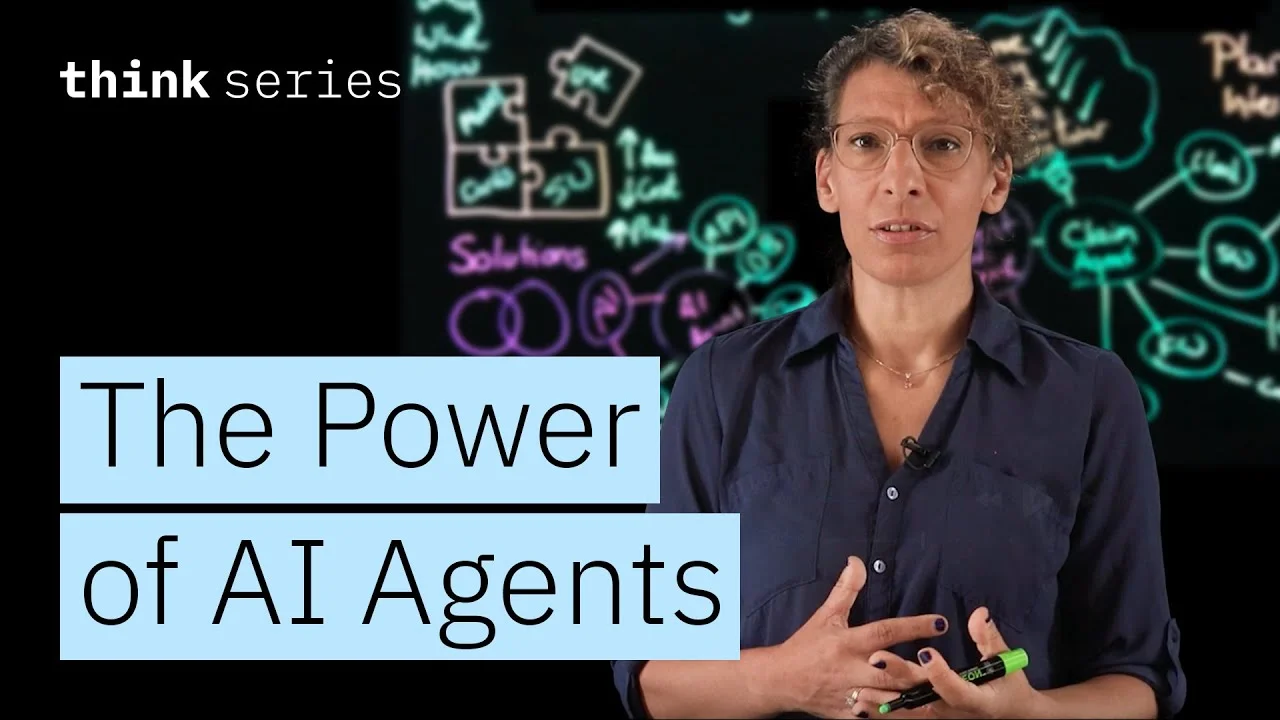
AI Agents and Agentic AI: IBM Technology explains the concept
Security and Control: Using AI Agents Correctly
AI Agents with tool access require clear security architecture:
Principle of Least Privilege: An agent receives only the permissions it needs for its task. A content agent can read and write, but not manage user accounts.
Human-in-the-Loop: For critical actions (modifying data, sending emails, publishing), a human must confirm. The agent suggests, the human decides.
Audit Trail: Every agent action is logged: which tool, which data, which result. Full traceability.
Sandbox Testing: New agents are tested in a sandbox environment before accessing production data.
Rate Limiting: Limiting API calls and actions per time period. Prevents an agent from entering an infinite loop on error.
AI Agents for Your Drupal Platform?
From feasibility analysis to production-ready implementation: arocom develops AI Agents with clear boundaries and measurable value.
Request AI Agent consultationWhat is an AI Agent?
An AI Agent is an AI system that completes tasks independently. It receives a goal, plans the necessary steps, uses tools (APIs, databases, search), and delivers a result, unlike chatbots that only answer individual questions.
What is the difference between an AI Agent and a chatbot?
A chatbot reacts to a single input with an answer. An AI Agent plans and executes multi-step tasks, uses external tools, checks results, and adjusts its approach. The chatbot answers, the agent acts.
Which framework is suited for AI Agents?
LangGraph (LangChain) for complex, controlled workflows. CrewAI for multi-agent systems. Anthropic's Agent SDK for Claude-based solutions. For simple agents, an LLM with MCP connectivity often suffices without a framework.
Are AI Agents secure?
Yes, with correct implementation. Key factors: minimal permissions, human-in-the-loop for critical actions, complete logging, and sandbox testing before production deployment.
How much does an AI Agent cost?
Running costs mainly consist of LLM API fees (depending on model and task complexity). An agent processing 100 tasks daily typically incurs API costs in the low double-digit euro range per month. Development costs depend on the complexity level.
Can an AI Agent operate my CMS?
Yes. Via APIs and MCP servers, an AI Agent can read, create, and edit content in Drupal. arocom implements such integrations with clear permission boundaries, the agent suggests, an editor approves.
Further Reading
- Agentic AI: The concept behind AI Agents
- MCP: Model Context Protocol: The standard for AI tool access
- Claude: Anthropic's AI Model: The model behind many agents
- RAG: Retrieval-Augmented Generation: Agents with your data
- n8n: Workflow Automation: Orchestration alongside agents
- Prompt Engineering: Better results from agents
- AI Integration as a Service: What arocom delivers
External Resources
- Anthropic: Building Effective Agents: Best practices from Anthropic
- LangGraph Documentation: Framework for agent workflows
- CrewAI: Multi-agent framework
- AI Agents and Agentic AI (YouTube, IBM Technology): Concept and practical examples
How does AI & Automation hold up on your website? The Future Check shows where the biggest levers are — in 2–4 weeks.
Go deeper
Read next
Copy this prompt and paste it into ChatGPT, Claude, or another AI — you'll get a personal learning plan for „AI Agents Explained: Autonomous AI Assistants for Business“.
You are an experienced coach for AI & Automation. I want to understand the topic "AI Agents Explained: Autonomous AI Ass...Reviewing an AI platform
24 review questions across six axes, with a findings sheet. Vendor-neutral.
Was this article helpful?