


Drupal Explained: The CMS for Complex Platforms
The question "What is Drupal?" leads in the wrong direction. The better question is: Does your organization need a CMS that grows with your requirements, or is a simpler system sufficient?
Drupal is not a website builder. It is a framework for digital platforms: websites, portals, intranets, multilingual presences, complex editorial systems. Drupal has existed since 2001, is developed by a global community, and runs on Drupal 11 in the current version. Over 47,000 modules extend the core. And all of this without license fees.
What Sets Drupal Apart from Other CMS
WordPress powers over 40% of all websites worldwide. TYPO3 is strong in the DACH region. Both are good systems, for certain requirements. Drupal differs in three key areas:
Architecture over plugin stacks. Multilingual support, access controls, and content modeling are core features. In WordPress you need plugin combinations for these, which create maintenance overhead and security risks.
Security as a principle. Drupal has a dedicated security team that proactively identifies vulnerabilities. The architecture cleanly separates presentation, logic, and data. Governments and enterprises use Drupal, for this reason as well.
AI readiness. Drupal produces structured data and semantic HTML. In a world where around 60% of all searches end without a click (Bain/Dynata, 2025), this is the prerequisite for AI systems to understand and cite your content.
How much Drupal has changed recently is the subject of a talk by Drupal core contributor Mike Herchel at PHPverse 2026 (24 minutes):
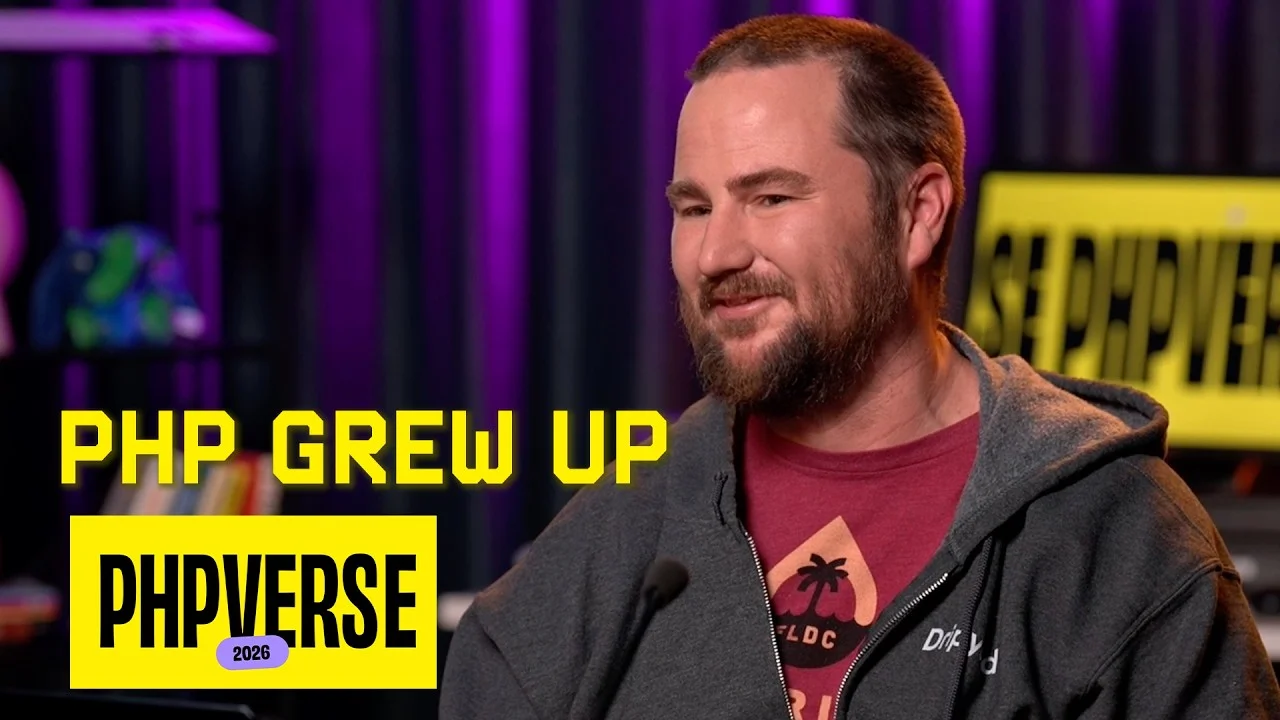
This Isn't the Drupal You Remember: Mike Herchel, PHPverse 2026
When Drupal Is the Right Decision
Drupal is the right choice when your platform needs to serve multiple languages, when different editors with different permissions are working, when complex content models are required, or when interfaces to ERP, CRM, or PIM systems are needed.
Typical Drupal projects: corporate websites with 500+ pages, intranet solutions, specialist portals like haustec.de, NGO platforms like CJD with 11,000 employees, web applications with custom business logic.
As a Drupal agency, arocom has implemented over 160 such Drupal projects since 2012, from international architecture firms (HENN) to audio technology specialists (Fohhn, d&b audiotechnik).
When Drupal Is Not the Best Choice
Drupal is not right for every project. If you need a simple website with 5-15 pages, WordPress or a page builder is the better choice. If the budget is under 15,000 EUR and the requirements are simple, Drupal is overkill. If you are looking for a pure e-commerce solution, Shopify or Shopware are often the better decision.
We will tell you that. No sales pitch that pushes you into a system that does not fit. That is exactly what the Future Check (Audit) is for: an independent analysis that clarifies what you need, before you invest.
Is Drupal the Right Fit for Your Project?
Find out, with the Future Check. An honest analysis of your requirements before you invest. Or write to us directly: our team responds within 4 business hours on weekdays.
Is Drupal free?
Yes. Drupal is open source and license-free. Costs arise for development, hosting, and maintenance, not for the software itself. Compared to proprietary systems like Adobe Experience Manager, you save license costs of often over 100,000 EUR per year.
Is Drupal hard to use?
Managing content is easy. Drupal offers an editorial system that editors can use without programming knowledge. Technical setup and maintenance require an experienced partner, that is exactly what arocom is for.
How secure is Drupal?
Drupal has one of the best security concepts of any CMS. A dedicated security team reviews and coordinates patches proactively. The architecture cleanly separates presentation and logic. Governments worldwide use Drupal, for this reason as well.
Which Drupal version is current?
Drupal 11 is the current version. Drupal 7, 8, and 9 have reached their end of life and no longer receive security updates. If you are still on an older version, an upgrade is necessary.
What does a Drupal website cost?
Serious Drupal projects start at approximately 25,000 EUR. Complex platforms range between 50,000 and 200,000 EUR. Those who want clarity upfront start with the Future Check (from 2,500 EUR plus VAT, creditable toward the follow-up project).
How does Drupal hold up on your website? The Future Check shows where the biggest levers are — in 2–4 weeks.
Go deeper
Read next
Copy this prompt and paste it into ChatGPT, Claude, or another AI — you'll get a personal learning plan for „Drupal Explained: CMS for Complex Platforms“.
You are an experienced coach for Drupal. I want to understand the topic "Drupal Explained: CMS for Complex Platforms" an...Drupal Future Check
Checklist: Is your Drupal installation future-proof? 15 review points.
Was this article helpful?